

Air Conditioning Newton MA Tips for a Cooler Home
Keeping a home comfortable during a Massachusetts summer requires more than simply lowering the thermostat. When heat and humidity arrive, the performance of your cooling system depends on a combination of proper maintenance, sensible thermostat settings, adequate airflow, insulation, humidity management, and the overall condition of the home.
For homeowners researching air conditioning Newton MA, a cooler home begins with understanding how these elements work together. An air conditioner may be functioning correctly and still struggle if filters are clogged, vents are obstructed, sunlight pours through uncovered windows, or conditioned air escapes through poorly sealed areas.
The goal is straightforward: help your cooling system do its job without making it work unnecessarily hard.
Understanding Air Conditioning in Newton MA
Newton homeowners experience a climate that demands versatility from residential HVAC equipment.
Heating receives substantial attention because of Massachusetts winters, but summer comfort is equally important. Warm temperatures combined with humidity can make indoor spaces uncomfortable even when the thermometer does not appear extreme.
An effective cooling strategy therefore considers:
- Temperature
- Humidity
- Airflow
- Sun exposure
- Insulation
- Air leakage
- HVAC condition
- Household behavior
When searching for air conditioning Newton MA, homeowners should think beyond the equipment itself.
The best-performing air conditioner still operates inside a building. If that building continually absorbs heat faster than the system can remove it, comfort suffers.
Why Summer Comfort Requires More Than Cold Air
Comfort is not determined exclusively by temperature.
Humidity, air movement, radiant heat, and room conditions influence how warm or cool a space feels.
A room at a particular temperature can feel pleasant when humidity is controlled and air circulates appropriately. The same room can feel oppressive when moisture levels are high and air remains stagnant.
This explains why simply purchasing a larger air conditioner does not automatically create better comfort.
Cooling should be approached as a complete system.
Get a free quote
AC Service Newton, MA
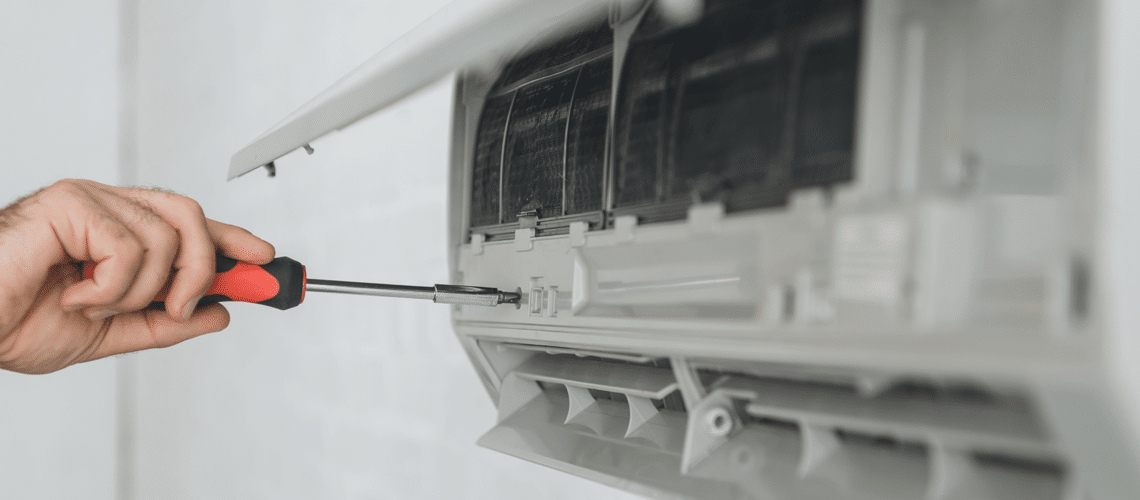
How Your Air Conditioning System Cools Your Home
An air conditioner does not manufacture cold air in the literal sense.
It moves heat.
In a typical system, indoor heat is absorbed and transported through the refrigeration cycle before being released outdoors.
At the same time, the blower circulates conditioned air through the home.
Cooling performance therefore depends on several processes working together:
- Air must move appropriately.
- Heat must transfer effectively.
- Refrigerant-system conditions must remain appropriate.
- Condensation must drain correctly.
- Controls must function properly.
A failure in any one area can affect the entire cooling process.
Start With the Right Thermostat Settings
Your thermostat is the command center for home comfort.
Choose a setting that balances personal comfort with reasonable system operation.
There is no universal perfect temperature for every household.
Consider:
- Occupancy
- Sun exposure
- Humidity
- Personal comfort
- Energy goals
- Home construction
Avoid constantly adjusting the thermostat every few minutes.
Give the system sufficient time to respond.
If the house cannot reach a reasonable setting under normal conditions, investigate the cause rather than continuing to lower the target.
Avoid Setting the Thermostat Extremely Low
Walking into a hot home and dropping the thermostat dramatically can be tempting.
It generally does not make a conventional air conditioner cool the home faster.
If your indoor temperature is 82°F and you want 74°F, setting the thermostat to 60°F usually does not accelerate the basic cooling process.
Instead, the system may simply continue operating after reaching a comfortable temperature.
Set the temperature you actually want.
If the system cannot achieve it, the problem may involve equipment performance, airflow, building heat gain, or another factor.
Use Programmable and Smart Thermostats Wisely
Programmable and smart thermostats can help align cooling with household schedules.
Potential benefits include:
- Automated temperature adjustments
- Reduced unnecessary cooling
- Remote control
- Usage information
- Scheduling
Technology is useful only when configured sensibly.
Extreme temperature setbacks can sometimes require lengthy recovery periods, particularly during hot weather.
Use moderate adjustments that correspond with your home, system, and lifestyle.
Check Your Air Filter Regularly
One of the simplest ways to support air conditioning Newton MA performance is maintaining the air filter.
Filters accumulate:
- Dust
- Fibers
- Pet hair
- Pollen
- Other airborne particles
Eventually, accumulation can restrict airflow.
Inspect the filter periodically and replace it according to actual condition, manufacturer guidance, and system requirements.
Households with pets or heavy system usage may need more frequent attention.
How Dirty Filters Affect Cooling
A heavily loaded filter makes air movement more difficult.
Restricted airflow can contribute to:
- Weak cooling
- Longer cycles
- Reduced comfort
- Increased equipment strain
- Higher energy consumption
- Certain freezing conditions
A filter is inexpensive compared with many HVAC repairs.
That makes regular filter inspection one of the highest-value maintenance habits homeowners can adopt.
Keep Supply Vents Open and Unobstructed
Walk through your home and inspect the supply registers.
Furniture and household belongings can inadvertently block them.
Common culprits include:
- Sofas
- Beds
- Cabinets
- Rugs
- Curtains
- Storage boxes
Conditioned air needs somewhere to go.
Keeping vents clear supports proper distribution throughout the home.
Avoid closing large numbers of supply registers without professional guidance, as doing so can alter system airflow.
Do Not Block Return Air Grilles
Return grilles are equally important.
They allow air to travel back toward the HVAC equipment for conditioning.
Blocking a return with furniture or other objects can interfere with circulation.
Keep return-air pathways reasonably clear.
If a room consistently has poor airflow despite open supply vents, a professional can evaluate whether the distribution system is functioning as intended.
Maintain Your Outdoor AC Unit
Outdoor air-conditioning equipment needs adequate airflow to release heat.
Periodically inspect the area around the unit.
Remove ordinary loose debris such as:
- Leaves
- Grass
- Weeds
- Twigs
Do not stack outdoor furniture, gardening supplies, or storage materials against the equipment.
Follow manufacturer recommendations for required clearance.
The condenser needs breathing room.
Keep Vegetation Away From the Condenser
Landscaping can gradually encroach on outdoor HVAC equipment.
Shrubs that looked appropriately spaced in spring can become dense by midsummer.
Trim vegetation as needed while maintaining appropriate clearance.
Avoid enclosing the condenser tightly with decorative fencing or shrubbery.
Hiding mechanical equipment may improve aesthetics, but restricting airflow can undermine performance.
Function should come first.
Check Outdoor Equipment After Severe Weather
Massachusetts weather can bring thunderstorms, strong winds, and falling branches.
After significant weather events, visually inspect the outdoor unit.
Look for:
- Fallen branches
- Accumulated leaves
- Physical damage
- Obstructions
- Displaced outdoor objects
If you notice damaged electrical components, refrigerant lines, or significant structural damage, do not attempt improvised repairs.
Arrange professional inspection.
Reduce Direct Sunlight Through Windows
Windows can introduce significant solar heat into a home.
Rooms with strong afternoon sun may become substantially warmer than shaded areas.
Consider using:
- Curtains
- Blinds
- Shades
- Appropriate window treatments
Closing suitable coverings during periods of intense direct sunlight can reduce heat gain.
This is especially useful for rooms receiving prolonged western or southern exposure.
Less incoming heat means less heat the AC must remove.
Use Curtains and Shades Strategically
You do not need to keep your home dark all summer.
Use window coverings strategically.
During periods when direct sunlight strikes a window, close or partially close the covering.
Open it later when solar exposure decreases.
This simple behavioral adjustment can improve comfort without changing HVAC equipment.
It costs little.
Yet across multiple sunny rooms, the cumulative effect can be meaningful.
Improve Insulation Where Needed
Insulation is often associated with winter heating, but it matters during summer too.
A well-insulated building resists heat transfer in both directions.
Areas worth evaluating can include:
- Attics
- Exterior walls
- Floors
- Certain basement or crawl-space areas
Poor attic insulation can allow substantial summer heat to influence living spaces below.
If upstairs rooms are consistently difficult to cool, insulation and attic conditions may deserve attention alongside the HVAC system.
Find and Address Air Leakage
Conditioned air escaping through gaps forces the AC to replace cooling that is continually being lost.
Common leakage locations can include:
- Windows
- Doors
- Attic penetrations
- Utility penetrations
- Other building-envelope gaps
Air sealing can improve both summer and winter performance.
For substantial comfort or efficiency problems, a professional home energy assessment can help identify areas that are difficult to locate through casual observation.
Manage Indoor Humidity
Humidity strongly influences summer comfort.
When indoor air contains excessive moisture, the home can feel warmer and heavier.
Air-conditioning systems normally remove some moisture while cooling.
Persistent high humidity can be associated with:
- Building infiltration
- Ventilation issues
- Equipment sizing
- System performance
- Moisture sources
Do not assume that lowering the thermostat dramatically is the best humidity solution.
The cause should be understood first.
Use Ceiling Fans Effectively
Ceiling fans do not lower the actual room temperature.
They move air across occupants, which can make the room feel cooler.
This can allow some households to remain comfortable at a slightly higher thermostat setting.
Remember:
Fans cool people, not empty rooms.
Turn them off when rooms are unoccupied unless there is another specific reason to keep them operating.
Use the appropriate seasonal direction according to the fan manufacturer's instructions.
Understand the Role of Ventilation
Fresh-air ventilation supports indoor air quality, but uncontrolled outdoor air can add heat and humidity during summer.
The solution is not to eliminate ventilation.
It is to manage it appropriately.
Homes differ substantially in:
- Tightness
- Mechanical ventilation
- Occupancy
- Moisture generation
- Building design
If your home feels persistently humid or stuffy, evaluate both ventilation and HVAC performance rather than focusing exclusively on thermostat temperature.
Avoid Adding Unnecessary Heat Indoors
Every heat-producing appliance increases the cooling load.
Examples include:
- Ovens
- Cooktops
- Dryers
- Incandescent lighting
- Electronics
You do not need to stop using your home normally.
However, during exceptionally hot afternoons, shifting certain heat-intensive activities to cooler periods can reduce the burden on the AC.
Small adjustments can accumulate.
Use Heat-Producing Appliances Strategically
If practical, consider:
- Running dishwashers later
- Using ovens during cooler periods
- Drying clothes outside peak afternoon heat
- Turning off unnecessary lighting
- Shutting down unused electronics
These measures will not replace an efficient cooling system.
They simply reduce avoidable heat gain.
Think of them as helping the AC rather than competing against it.
Pay Attention to Uneven Room Temperatures
If one room is consistently much warmer than the others, investigate why.
Possible factors include:
- Sun exposure
- Insulation
- Ductwork
- Airflow
- Closed vents
- Window performance
- Room location
New temperature differences are particularly noteworthy.
If a room that cooled well last year suddenly becomes uncomfortable, something may have changed.
Do not automatically assume the air conditioner needs more capacity.
Watch for Weak Airflow
Weak airflow from multiple vents can indicate a system problem.
Begin with the filter and obvious obstructions.
If those are not responsible, possible issues may involve:
- Blower performance
- Ductwork
- Mechanical restrictions
- Other HVAC faults
Weak airflow combined with poor cooling deserves professional evaluation.
Ignoring the problem may allow the system to operate for extended periods without delivering adequate comfort.
Listen for Unusual AC Noises
HVAC equipment has a normal acoustic signature.
You probably know it without realizing it.
A sudden new sound should therefore attract attention.
Potential warning noises include:
- Grinding
- Scraping
- Squealing
- Banging
- Rattling
- Buzzing
- Persistent clicking
Note where and when the sound occurs.
That information can help an HVAC technician locate the problem more efficiently.
Never Ignore Strange Odors
Persistent odors deserve investigation.
A musty smell may suggest excess moisture somewhere in the system or building.
An electrical or burning odor can indicate a more urgent concern.
If you notice smoke or signs of an electrical fire, shut the equipment down if it is safe to do so and seek appropriate assistance.
Do not continue operating equipment that appears unsafe simply because the home is hot.
Look for Water Around AC Equipment
Air conditioners produce condensation during normal operation.
That moisture should drain appropriately.
Water around indoor HVAC equipment can indicate:
- Drainage blockage
- Drain-pan problems
- Condensate pump issues
- Frozen-coil conditions
- Other faults
A small amount of water can cause substantial property damage if ignored.
Investigate promptly.
Understand Why Air Conditioners Can Freeze
Ice on an air conditioner may seem strange during summer.
It indicates abnormal operating conditions.
Potential causes can include:
- Restricted airflow
- Dirty filters
- Blower problems
- Refrigerant-system issues
- Other mechanical faults
Do not repeatedly remove the ice and restart the equipment.
The ice is evidence.
Find the underlying cause.
Watch for Frequent AC Cycling
An air conditioner that turns on and off repeatedly may be short cycling.
This behavior can affect comfort and increase equipment wear.
Potential causes vary and may include:
- Thermostat problems
- Electrical controls
- Airflow
- Equipment sizing
- Other mechanical issues
If the cycling pattern changes noticeably, arrange an evaluation.
Normal cycle length varies, so focus on significant changes from established behavior.
Pay Attention to Excessively Long Cooling Cycles
Longer cycles are normal during very hot weather.
However, an AC that seems to run endlessly under ordinary conditions may be struggling.
Possible causes include:
- Dirty filters
- Duct leakage
- Building heat gain
- Equipment deterioration
- Airflow problems
- Thermostat issues
Compare similar weather conditions when evaluating performance.
Context matters.
Monitor Your Summer Energy Consumption
Electric bills can reveal changes in system operation.
But compare energy usage, not just price.
Utility rates and weather can influence cost independently of HVAC efficiency.
If consumption rises significantly without a clear explanation, investigate:
- AC runtime
- Filter condition
- Thermostat schedules
- Building heat gain
- Equipment performance
Patterns across several billing periods are more useful than a single bill.
Schedule Preventive AC Maintenance
Professional maintenance can identify conditions homeowners cannot evaluate safely or accurately.
Depending on equipment, service may involve:
- Electrical inspection
- Cooling-performance checks
- Airflow evaluation
- Drainage inspection
- Coil assessment
- Motor evaluation
- Thermostat testing
- Refrigerant-system evaluation
Schedule maintenance according to equipment manufacturer recommendations and professional guidance.
Ideally, address known problems before peak summer demand.
What Professional AC Maintenance Should Cover
Not every company defines an AC tune-up the same way.
Before scheduling service, ask what the visit includes.
A comprehensive inspection may evaluate:
- Thermostat operation
- Filter condition
- Electrical components
- Blower performance
- Condensate drainage
- Coil condition
- Outdoor equipment
- Cooling performance
- System controls
- General equipment condition
A detailed maintenance report can also establish useful performance history.
Know When Your AC Needs Repair
Maintenance preserves normal operation.
Repair addresses malfunction.
Call for professional service when you notice persistent:
- Inadequate cooling
- Weak airflow
- Unusual noise
- Strange odors
- Water leakage
- Ice formation
- Short cycling
- Electrical problems
- Failure to start
Prompt attention can prevent a minor problem from escalating.
Do not wait for total failure if the system is clearly behaving abnormally.
Repair vs. Replacement
Not every old AC needs replacement.
Not every broken AC deserves another repair.
The decision should consider:
- Equipment age
- Repair cost
- Repair frequency
- Cooling performance
- Energy consumption
- Comfort
- Equipment condition
- Parts availability
For an expensive repair, ask for both repair and replacement perspectives.
A relatively minor problem on otherwise dependable equipment may justify repair.
Repeated major failures can change the calculation.
Choosing the Right AC System for Your Home
If replacement becomes necessary, equipment selection should reflect the home's actual requirements.
Consider:
- Home size
- Insulation
- Windows
- Air leakage
- Sun exposure
- Ductwork
- Existing HVAC configuration
- Comfort goals
Do not choose equipment based solely on the nominal size of the old unit.
Changes to the home may have altered its cooling requirements.
Professional load calculations can help determine appropriate capacity.
Why Proper AC Sizing Matters
Bigger is not automatically better.
Oversized equipment can cool a home quickly but may cycle differently and potentially provide inadequate humidity management depending on system design and conditions.
Undersized equipment may struggle during high demand.
Proper sizing seeks balance.
The correct system should match the building's cooling load rather than an arbitrary rule of thumb.
This is one of the most important considerations during replacement.
Ducted Systems vs. Ductless Cooling
Newton homes vary widely in age, layout, and HVAC infrastructure.
Some properties already have central ductwork.
Others may be better candidates for ductless systems in certain applications.
Ducted Systems
These distribute conditioned air through a network of ducts.
Ductless Systems
These can provide targeted heating and cooling without conventional whole-home ductwork.
The best option depends on:
- Existing infrastructure
- Home layout
- Renovation plans
- Comfort requirements
- Budget
An experienced contractor can explain the tradeoffs.
How to Choose an Air Conditioning Contractor
When searching for air conditioning Newton MA, compare contractors carefully.
Consider:
- Relevant HVAC experience
- Appropriate Massachusetts credentials
- Insurance
- Written estimates
- Equipment knowledge
- Warranty information
- Customer feedback
- Communication
- Maintenance support
For work requiring specific Massachusetts licenses or permits, verify current requirements with the appropriate authority.
Do not select a contractor based solely on the lowest price.
Value includes workmanship and accountability.
Questions to Ask an HVAC Professional
Before approving significant AC work, ask:
- What is causing the problem?
- What repair do you recommend?
- Are there alternative solutions?
- What does the estimate include?
- What warranty applies?
- Is the system appropriately sized?
- Is airflow adequate?
- Is ductwork affecting performance?
- Are there developing problems?
- Is replacement worth considering?
- What maintenance should I perform?
- What can improve summer comfort?
Good technicians should be able to explain recommendations clearly.
Common Air Conditioning Mistakes to Avoid
Avoid these common habits:
Setting the Thermostat Extremely Low
It does not repair poor cooling.
Ignoring Filters
Restricted airflow can cause problems.
Blocking Vents
Conditioned air needs circulation.
Obstructing the Outdoor Unit
Heat needs somewhere to go.
Ignoring Water
Small leaks can become property damage.
Ignoring Ice
Freezing is a symptom of abnormal operation.
Repeatedly Resetting Breakers
Electrical faults require diagnosis.
Waiting for Complete Failure
Early repair generally provides more options.
Summer Cooling Checklist
Use this simple checklist during warm weather.
Airflow
- Inspect filter
- Keep supply vents clear
- Keep returns unobstructed
Outdoor Equipment
- Clear ordinary debris
- Maintain vegetation clearance
- Inspect after storms
Home
- Control direct sunlight
- Use fans appropriately
- Reduce unnecessary heat gain
- Evaluate obvious air leakage
Equipment
- Listen for unusual noises
- Watch for water
- Look for ice
- Monitor cycling
- Track cooling performance
Professional Care
- Schedule maintenance
- Address persistent problems
- Keep service records
Small actions performed consistently can make a meaningful difference.
Frequently Asked Questions
How Can I Improve Air Conditioning Newton MA Performance?
Start with clean filters, unobstructed vents, reasonable thermostat settings, outdoor-unit clearance, controlled sunlight, and appropriate professional maintenance.
What Temperature Should I Set My AC?
There is no universal perfect temperature. Choose a comfortable setting that reflects your household needs and energy goals.
Does Lowering the Thermostat Cool My Home Faster?
Typically, dramatically lowering the thermostat does not make a conventional AC system cool faster. Set the temperature you actually want.
How Often Should I Replace My AC Filter?
Frequency depends on filter type, household conditions, system usage, pets, and manufacturer recommendations. Inspect it regularly.
Why Is My Upstairs Hotter Than Downstairs?
Possible causes include heat rising within the home, attic conditions, sun exposure, insulation, airflow, ductwork, and building design.
Why Is My AC Running but the House Is Still Warm?
The cause may involve airflow, equipment performance, ductwork, building heat gain, thermostat problems, or another issue.
Why Is There Ice on My AC?
Ice can result from airflow problems, blower issues, refrigerant-system conditions, or other faults. Professional diagnosis may be needed.
Why Is My AC Leaking Water?
Condensate drainage problems, frozen coils, pump failures, or other issues may cause water around indoor equipment.
Should I Repair or Replace My Air Conditioner?
Consider equipment age, repair cost, reliability, efficiency, comfort, and repair history.
When Should I Schedule AC Maintenance?
Follow manufacturer recommendations and professional guidance. Scheduling before heavy cooling season can help identify problems before peak demand.
Final Thoughts
A cooler home does not necessarily require running the air conditioner harder.
Often, the better strategy is helping the entire home work with the cooling system instead of against it.
For homeowners researching air conditioning Newton MA, start with straightforward fundamentals: maintain appropriate filters, keep vents and returns unobstructed, provide outdoor equipment with adequate airflow, manage direct sunlight, reduce unnecessary indoor heat, and pay attention to humidity.
Then watch the system itself.
Unusual noises, persistent odors, weak airflow, water, ice, short cycling, unusually long runtime, or deteriorating cooling performance should not be ignored simply because the equipment still turns on.
These symptoms can provide valuable early warnings.
Professional maintenance adds another layer of protection by evaluating electrical components, drainage, airflow, coils, motors, controls, and cooling performance that homeowners cannot safely assess themselves.
The building also matters.
Insulation, air sealing, windows, ductwork, solar exposure, and ventilation can substantially influence summer comfort. An excellent air conditioner installed in an inefficient home may still struggle.
Think of cooling as a partnership between the equipment and the house.
Reduce unnecessary heat gain. Maintain unrestricted airflow. Address small problems before they become major repairs. Use sensible thermostat settings. Schedule qualified service when technical issues appear.
When all of these elements work together, the result is not merely a colder home.
It is a home that stays comfortable more efficiently, consistently, and reliably throughout the summer.