

Ductless Mini Split Installation in Newton, MA
Tired of uneven temperatures, noisy window air conditioners, or struggling to keep your home comfortable throughout the year? A ductless mini-split system could provide the flexible heating and cooling solution your property needs.
At Newton Air Conditioning Specialists, we help homeowners explore ductless mini split installation in Newton, MA, including solutions for older homes without ductwork, home additions, and rooms that need independent temperature control. Whether you're upgrading your cooling equipment or looking for an alternative to traditional air conditioning, selecting the right system starts with understanding your home's heating and cooling needs.
If you're considering a new mini-split, it's also worth understanding the importance of AC maintenance in Newton, MA to help protect your investment and maintain system performance.
Ready to improve your home's comfort? Contact Newton Air Conditioning Specialists to request a ductless mini-split installation quote.
Professional Ductless Mini Split Installation for Newton Homes
Not every home in Newton was designed for central air conditioning. Some older properties have radiator heating, limited space for ductwork, or additions that are difficult to cool with an existing HVAC system.
Ductless mini-splits offer an alternative by providing conditioned air directly to individual rooms or zones without requiring extensive duct installation.
A properly designed ductless system can support:
- Comfortable indoor temperatures during warm Massachusetts summers.
- Heating during colder months when an appropriate heat-pump model is installed.
- Independent temperature control in selected rooms.
- Efficient operation without the energy losses associated with leaky ductwork.
- Flexible cooling options for renovated homes, additions, and converted living areas.
However, a mini-split is not automatically the best choice for every property. Its effectiveness depends on correct equipment sizing, building insulation, indoor unit placement, and the home's overall heating and cooling requirements.
That's why understanding your property should come before choosing equipment.
Get a free quote
AC Service Newton, MA
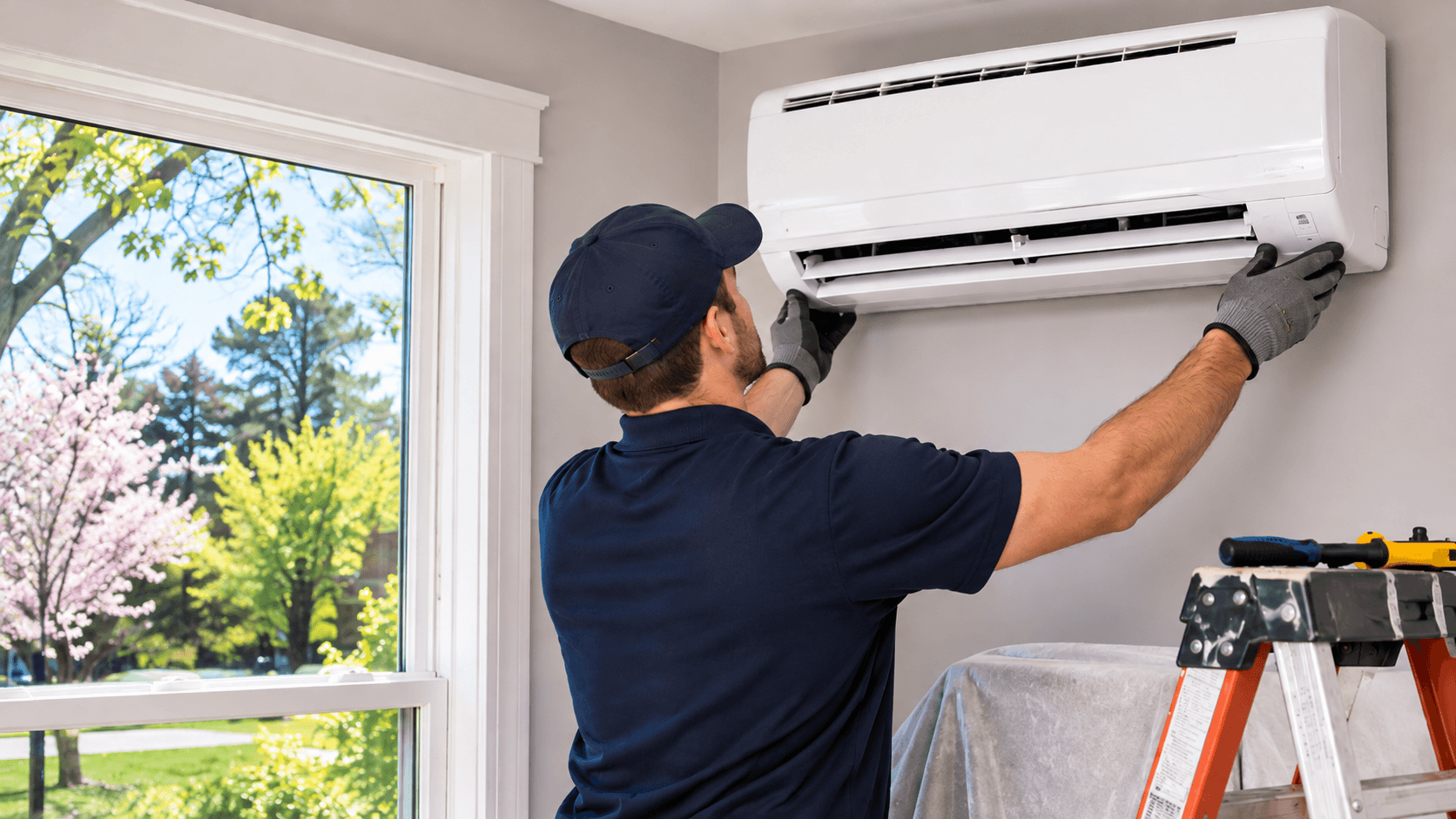
What Is a Ductless Mini Split and How Does It Work?
A ductless mini-split is an air conditioning or heat-pump system that conditions indoor spaces without using conventional air distribution ducts.
Most systems consist of an outdoor unit connected to one or more indoor units through refrigerant piping, electrical connections, and condensate drainage.
During cooling operation, the system absorbs heat from inside your home and releases it outdoors.
When equipped with heat-pump functionality, the system can reverse this process to provide indoor heating.
Unlike traditional systems that distribute conditioned air through ductwork, ductless equipment delivers heating or cooling directly into the areas served by its indoor units.
The U.S. Department of Energy's guidance on heat pumps identifies ductless mini-splits as a flexible option for homes without existing ductwork, particularly where room-by-room temperature control is useful.
Single-Zone Ductless Mini Splits
A single-zone mini-split typically connects one outdoor unit to one indoor unit.
This configuration may be suitable for a bedroom, home office, finished attic, or addition that needs independent heating and cooling.
For example, a homeowner renovating an upstairs bedroom may consider a single-zone system if extending existing ductwork is impractical.
Multi-Zone Ductless Mini Splits
A multi-zone system connects several compatible indoor units to an outdoor unit.
This arrangement allows different areas to have individual temperature settings, subject to the system's operating capabilities.
Multi-zone configurations may be appropriate for homes where several bedrooms or living spaces require independent comfort control.
The correct design depends on the heating and cooling loads of each zone, available equipment capacity, and the manufacturer's system requirements.
Benefits of Installing a Ductless Mini Split in Newton, MA
Heating and Cooling Without Extensive Ductwork
One of the biggest advantages of ductless air conditioning is that it does not require traditional ductwork to distribute conditioned air.
This is particularly relevant for older homes where installing a new duct system could involve opening walls, ceilings, or finished spaces.
Although mini-split installation still requires refrigerant piping, electrical work, drainage, and suitable mounting locations, it may reduce the construction work associated with adding ducted air conditioning.
Individual Room Temperature Control
Different areas of a home often have different comfort requirements.
A sun-facing bedroom may become warmer than the rest of the house, while a home office may need cooling during working hours.
Ductless mini-splits can provide independent temperature control in selected spaces, depending on system configuration.
This can help homeowners manage comfort without relying entirely on one thermostat for the whole property.
Potential Energy Efficiency Improvements
Many modern mini-splits use inverter-driven compressors that adjust operation according to heating and cooling demand.
This allows compatible systems to vary output instead of operating at one fixed capacity.
Ductless systems also avoid heat losses associated with poorly sealed ductwork.
However, actual energy savings depend on the existing equipment, building insulation, weather, installation quality, and operating habits.
A properly designed system is more important than relying on advertised efficiency ratings alone.
Year-Round Comfort With Heat Pump Models
Many ductless mini-splits provide both heating and cooling.
During summer, they cool indoor spaces. During winter, heat-pump models transfer heat from outdoor air into the home.
Cold-climate models are designed for lower outdoor temperatures, making them worth considering for Massachusetts homes.
However, heating performance varies by equipment and temperature. A system intended to provide whole-home heating must be evaluated against the property's winter heating load.
Flexible Options for Home Renovations
Adding central air conditioning to a finished attic, converted garage, or newly constructed addition can present challenges.
A ductless mini-split may provide a practical alternative, particularly when the existing cooling system cannot adequately serve the additional space.
Installation feasibility depends on electrical capacity, suitable equipment locations, and building conditions.
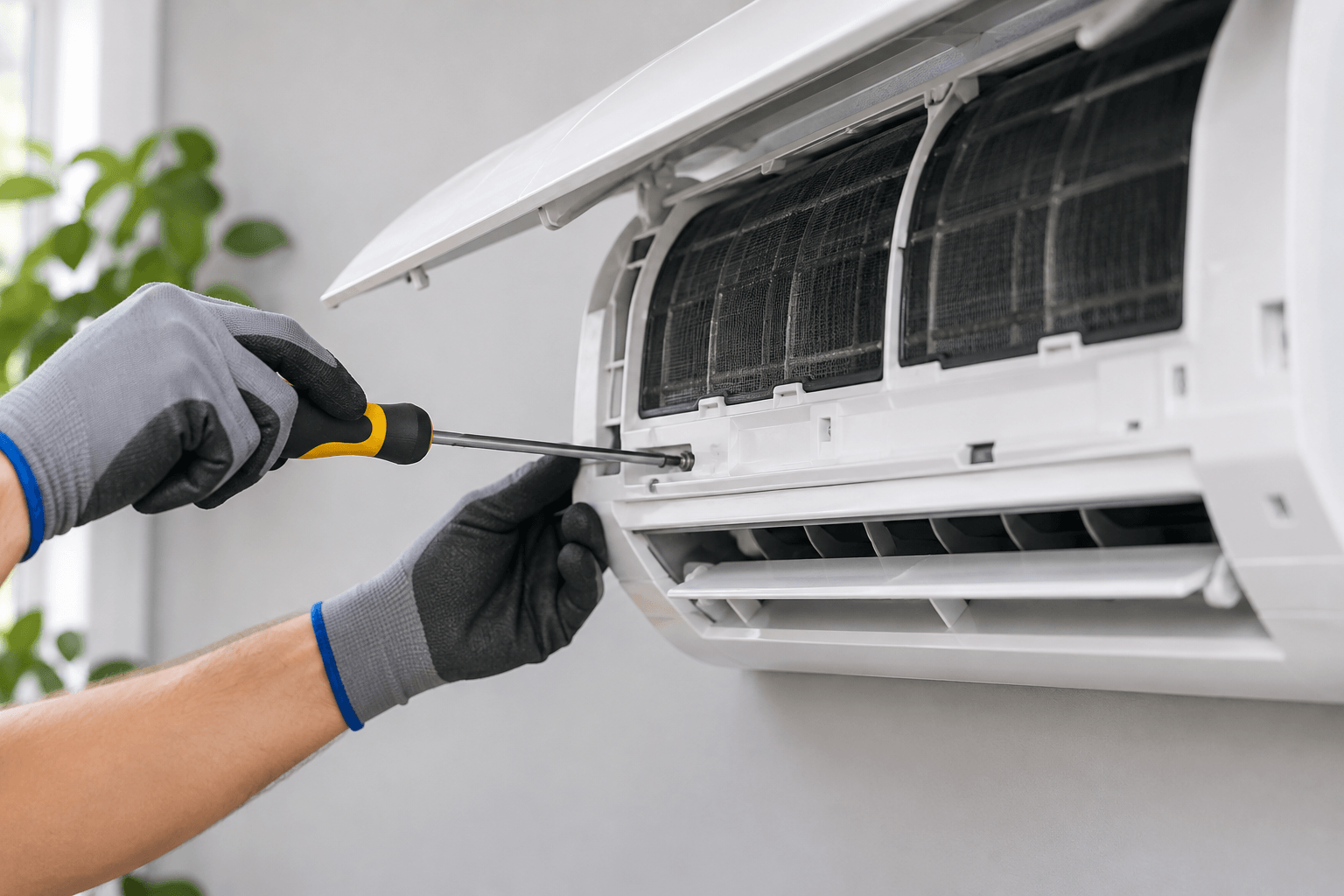
Is a Ductless Mini Split Right for Your Newton Home?
Before investing in a new system, consider how your home is constructed and which areas need heating or cooling.
Older Homes Without Existing Ductwork
Newton includes many established residential neighborhoods with older properties that may use radiators, baseboard heating, or other systems without extensive air ducts.
In these homes, adding conventional central air conditioning can involve significant modifications.
A ductless mini-split may offer an alternative that avoids the need to construct a full duct distribution system.
Properties with historic architectural features may require additional planning to minimize visible alterations and comply with applicable restrictions.
Homes With Uneven Heating or Cooling
If one bedroom is consistently warmer or colder than other rooms, the cause may involve insulation, sunlight exposure, airflow, or equipment capacity.
A ductless mini-split can sometimes address the comfort needs of a particular area.
However, it is important to investigate the underlying problem before adding equipment. Improving insulation or correcting an existing HVAC issue may be a more appropriate first step.
Finished Attics, Basements, and Home Offices
Converted living spaces often have different heating and cooling requirements from the original home.
Attics may experience high summer temperatures, while basements can have different humidity and temperature conditions.
A properly sized ductless system may help maintain comfort in these spaces without extending existing ductwork.
Homeowners Replacing Window Air Conditioners
Window air conditioners can provide effective room cooling, but some homeowners prefer permanent equipment with quieter indoor operation and greater temperature-control options.
A ductless mini-split may be worth considering when replacing multiple window units or upgrading the comfort of frequently used rooms.
Our Approach to Planning Ductless Mini Split Installation
A reliable installation depends on careful assessment, equipment selection, and proper commissioning.
Before accepting an installation proposal, homeowners should understand the following important steps.
Step 1: Assess the Home's Heating and Cooling Requirements
A suitable installation begins with evaluating the spaces that need heating or cooling.
Important factors include:
- Room sizes and layouts.
- Insulation and air leakage.
- Window sizes and sun exposure.
- Ceiling heights and building orientation.
- Existing heating and cooling equipment.
- Desired indoor temperatures.
- Local outdoor design temperatures.
A recognized load calculation, such as an ACCA Manual J assessment, provides a more reliable basis for equipment sizing than choosing capacity based only on square footage.
Correct sizing matters because oversized or undersized equipment can affect efficiency, humidity control, and comfort.
Step 2: Select the Appropriate Equipment
Once the heating and cooling requirements are understood, suitable systems can be compared.
The evaluation should consider heating and cooling capacity, efficiency ratings, cold-weather performance, indoor unit configurations, and manufacturer specifications.
For Massachusetts homes considering heat pumps for primary heating, low-temperature performance deserves particular attention.
Step 3: Determine Indoor and Outdoor Unit Placement
Indoor units should be positioned for effective air distribution and accessible maintenance.
Outdoor units need sufficient airflow, stable mounting, appropriate drainage, and clearance for service.
In Massachusetts, outdoor placement should also consider snow accumulation, roof runoff, and ice.
The final location depends on the manufacturer's requirements and property conditions.
Step 4: Complete Electrical and Refrigerant Connections
Installation involves connecting the indoor and outdoor equipment through refrigerant piping, electrical wiring, and condensate drainage.
Work must comply with applicable building and electrical requirements.
Refrigerant handling and electrical connections should be performed by appropriately qualified professionals.
Step 5: Test the System and Review Operation
After installation, the equipment should be checked according to the manufacturer's commissioning procedures.
Testing may include verifying system operation, checking condensate drainage, confirming controls, and assessing heating or cooling performance.
Homeowners should also understand how to operate the controls, clean accessible filters, and recognize signs that professional maintenance may be needed.
Planning a ductless installation? Request a quote based on your home's actual requirements rather than relying on generic equipment pricing.
How Much Does Ductless Mini Split Installation Cost in Newton, MA?
The cost of ductless mini-split installation varies depending on the system, property layout, and installation requirements.
A single-zone system for one room will generally involve different equipment and labor costs than a multi-zone system serving multiple areas.
What Affects Mini-Split Installation Costs?
Number of indoor units: More indoor units generally mean additional equipment, piping, wiring, and installation work.
System capacity: Larger heating and cooling requirements may call for equipment with greater capacity.
Equipment efficiency: Higher-efficiency and cold-climate models may have different upfront costs.
Electrical requirements: Some properties may need new circuits, electrical upgrades, or other modifications.
Installation complexity: Equipment placement, line-set routing, wall construction, and property access can influence labor costs.
Additional work: Drainage components, mounting hardware, permits, and other project requirements may affect the final estimate.
What Should an Installation Quote Include?
Before agreeing to an installation, request a written proposal identifying:
- Proposed equipment and model numbers.
- Indoor and outdoor unit quantities.
- Heating and cooling capacity.
- Scope of installation work.
- Electrical work and any exclusions.
- Applicable permits and inspections.
- Equipment and installation warranty terms.
- Total quoted price and any conditions.
Comparing detailed proposals is more useful than comparing headline prices without understanding what is included.
For an accurate estimate, contact Newton Air Conditioning Specialists with details about your home and the rooms you want to heat or cool.
Are Ductless Mini Split Rebates Available in Massachusetts?
Massachusetts homeowners may qualify for rebates through Mass Save when installing eligible heat-pump equipment.
For 2026, the program lists different incentives for whole-home, partial-home, and basic air-source heat-pump installations.
Eligibility depends on factors such as existing heating fuel, utility sponsorship, equipment specifications, contractor participation, and whether the new system replaces or supplements existing heating.
The program also has installation and application deadlines.
Importantly, not every ductless mini-split installation qualifies for a rebate.
For example, adding a mini-split to a previously unconditioned room may be treated differently from replacing an existing heating system.
Before proceeding, review the current Mass Save air-source heat pump rebate requirements and confirm whether your project qualifies.
Do not include a rebate amount in your expected budget until your eligibility and proposed equipment have been verified.
Ductless Mini Split vs. Central Air Conditioning: Which Is Better?
Both ductless mini-splits and central air conditioning can provide effective indoor cooling.
The better choice depends on your home's layout, existing equipment, and comfort goals.
| Feature | Ductless Mini Split | Central Air Conditioning |
|---|---|---|
| Ductwork | Does not require traditional air distribution ducts | Typically uses existing or newly installed ducts |
| Temperature control | Individual room or zone control | Usually centralized unless zoning is added |
| Heating | Available with heat-pump models | Depends on the paired heating system |
| Installation considerations | Requires indoor units, line sets, and outdoor equipment | Requires suitable ductwork and central equipment |
| Home suitability | Useful for selected rooms and homes without ducts | Often practical when adequate ductwork already exists |
| Appearance | Indoor units are usually visible | Conditioned air is commonly delivered through registers |
When a Mini-Split May Be the Better Option
A ductless system may be attractive when your property does not have existing ductwork, several rooms need independent temperature control, or you are adding heating and cooling to a renovated space.
When Central Air Conditioning May Be More Practical
A central system may be preferable when your home already has well-designed, properly sealed ductwork and you want whole-home cooling through existing registers.
Neither option should be selected solely because it is newer or advertised as more efficient.
The appropriate choice depends on installation requirements, equipment performance, and long-term operating needs.
Ductless Mini Split Maintenance and Repair
Like any HVAC system, a ductless mini-split requires regular maintenance to maintain proper performance.
Over time, dirt can accumulate on filters and coils, drainage lines may become blocked, and system components can develop operating problems.
How to Maintain a Ductless Mini Split
Basic homeowner maintenance typically includes checking and cleaning accessible air filters according to the manufacturer's instructions.
Other important tasks may include:
- Inspecting indoor and outdoor coils.
- Checking condensate drainage.
- Removing obstructions around outdoor equipment.
- Evaluating system airflow.
- Checking for unusual operating noises.
- Reviewing heating and cooling performance.
Electrical and refrigerant servicing should be handled by qualified personnel.
For additional guidance, visit our air conditioning maintenance page for Newton homeowners.
Signs Your Mini-Split May Need Repair
Contact a qualified HVAC service provider if your system:
- Stops producing adequate heating or cooling.
- Develops persistent unusual noises.
- Leaks water indoors.
- Displays repeated error codes.
- Produces unexpected odors.
- Frequently shuts down or fails to start.
These symptoms do not always mean the entire system needs replacement.
An inspection can help identify whether the problem involves maintenance, a failed component, a drainage issue, or another fault.
If you are experiencing a cooling problem, learn more about AC repair in Newton, MA.
Ductless Mini Split Considerations for Newton, Massachusetts Homes
Choosing heating and cooling equipment in Newton requires attention to both summer comfort and winter conditions.
The city includes a mix of older homes, renovated properties, and newer residential construction.
A system suitable for a compact home office may not be appropriate for a large, multi-story property.
Newton Centre and Newton Highlands
Homeowners in established neighborhoods may encounter properties with older heating infrastructure or limited space for conventional ductwork.
A ductless system can be worth evaluating when retrofitting heating or cooling into a finished home.
Newtonville and West Newton
In properties with additions, converted rooms, or mixed heating and cooling systems, individual temperature control may be useful.
The best solution depends on how the existing equipment serves each part of the home.
Newton Corner and Other Newton Neighborhoods
For properties with unique layouts, the location of indoor and outdoor units and the available electrical capacity can affect installation feasibility.
Before selecting equipment, homeowners should verify that the intended design meets the building's requirements.
Whether you are planning a single-room installation or comparing whole-home options, contact Newton Air Conditioning Specialists to discuss service availability for your location.
Why Choose Newton Air Conditioning Specialists?
Choosing an HVAC provider involves more than finding a system at the lowest advertised price.
A reliable installation proposal should explain which equipment is suitable for your home, what work is required, and how the system is expected to perform.
Newton Air Conditioning Specialists helps homeowners begin the process of exploring air conditioning solutions in Newton, MA.
When contacting the team, you can describe your home's existing equipment, the rooms that need heating or cooling, and the comfort problems you want to solve.
Before approving any installation, ask about the proposed equipment, sizing method, installation requirements, applicable permits, contractor qualifications, and warranty coverage.
Understanding these details helps you make a more informed decision and avoid choosing equipment based on price alone.
Ready to explore your options? Request a ductless mini-split installation quote from Newton Air Conditioning Specialists.
Frequently Asked Questions About Ductless Mini Splits in Newton, MA
How much does it cost to install a ductless mini-split in Newton, MA?
Installation cost depends on the number of indoor units, system capacity, equipment model, electrical requirements, and installation complexity. A property-specific quote is the best way to understand the expected cost.
Are ductless mini-splits good for older homes in Newton?
They can be an excellent option to evaluate, particularly when a home lacks existing air ducts. However, suitability depends on the building's layout, insulation, electrical infrastructure, and installation restrictions.
Can a ductless mini-split heat my home in winter?
Many cold-climate heat-pump models are designed to provide heating during Massachusetts winters. Performance depends on outdoor temperature, equipment selection, and proper sizing. Some homes may require supplemental heating.
How many mini-split units does my home need?
The number depends on room layout, heating and cooling loads, desired temperature zones, and system design. A professional load calculation helps determine suitable equipment and unit placement.
Is a mini-split cheaper to run than central air conditioning?
It depends on the systems being compared. Equipment efficiency, energy rates, duct condition, insulation, operating patterns, and installation quality all affect running costs.
How long does mini-split installation take?
A single-zone installation may require less time than a multi-zone project. Actual timing depends on electrical work, building access, installation complexity, and any required permits or inspections.
Do ductless mini-splits need annual maintenance?
Regular professional maintenance is generally recommended, along with homeowner filter care according to the manufacturer's instructions. Systems used for both heating and cooling may benefit from additional seasonal checks.
Can I install a mini-split in just one room?
Yes. Single-zone mini-split systems are specifically designed to serve one room or designated area, provided the equipment is appropriately sized.
Are ductless mini-splits noisy?
Many modern indoor mini-split units operate quietly, but sound levels vary by model and operating speed. Outdoor unit placement should also consider noise and proximity to neighboring properties.
Are Massachusetts heat-pump rebates available for ductless systems?
Some qualifying ductless heat-pump installations may be eligible for Mass Save incentives. Eligibility depends on the equipment, contractor, existing heating system, and program rules in effect at the time of installation.
Request a Ductless Mini Split Installation Quote in Newton, MA
If your home has uneven temperatures, limited ductwork, or a room that needs better heating and cooling, a ductless mini-split may be worth considering.
Newton Air Conditioning Specialists can help you begin exploring options for your property.
When you contact us, share:
- Your Newton neighborhood or ZIP code.
- The rooms or areas you want to heat or cool.
- Whether your property has existing central air conditioning.
- Whether you need cooling only or year-round heating and cooling.
- Any current comfort problems or renovation plans.
These details will help start a more informed discussion about your installation needs.
Take the next step toward a more comfortable home.
Request Your Ductless Mini Split Installation Quote Today.
Newton Air Conditioning Specialists — Newton, Massachusetts.